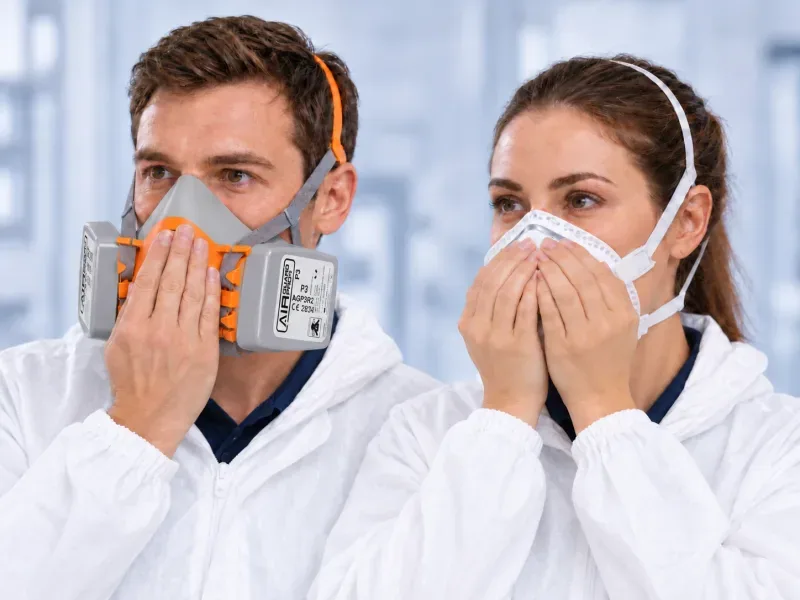
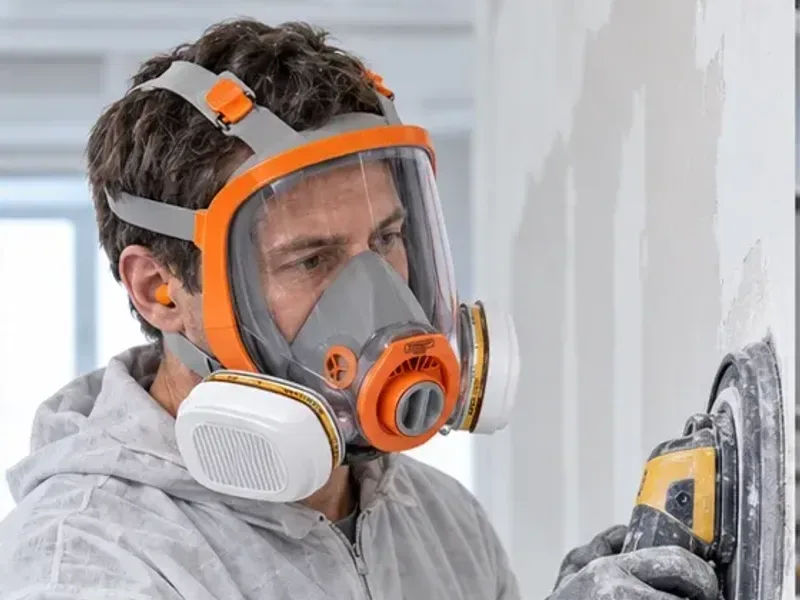
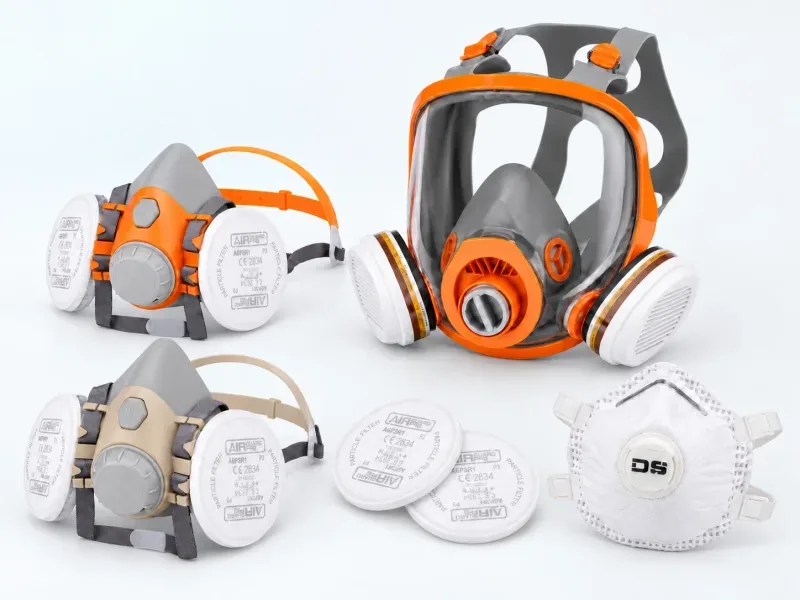
The three classes at a glance
FFP stands for filtering face piece against particles. Classes 1 to 3 describe the degree of protection under EN 149. In practice the highest permitted multiple of the workplace exposure limit (AGW) under DGUV Rule 112-190 counts:
| Class | Permitted up to | AirGuard Pro masks |
|---|---|---|
| FFP1 | 4 times AGW | 6100 without valve |
| FFP2 | 10 times AGW | 6201 with valve, 6203 folding mask without valve |
| FFP3 | 30 times AGW | 6311, 6311C with activated carbon, 6312 Fish Snap |
Which class when?
- FFP1: occasional work with low-hazard dust at a low concentration, such as tidying or cleaning.
- FFP2: the standard for many dust jobs at medium exposure, for example grinding and sawing, provided the substance is not carcinogenic.
- FFP3: fine dusts that are harmful to health and higher concentrations up to 30 times the limit value. If in doubt or if exposure varies, FFP3 is the safe side.
The instructions for use exclude FFP1 against carcinogenic, mutagenic and reprotoxic substances, radioactive substances, biological agents of risk groups 2 and 3, and enzymes. FFP2 is permitted for these only after a risk assessment.
With or without exhalation valve
The valve makes exhaling easier and reduces heat and moisture under the mask. Exhaled air is not filtered. Where the surroundings must be protected from the wearer, for example in food processing, clean areas or care, choose a mask without a valve. For heavy work and long wearing time the valve is more comfortable.
NR and D: what is printed on the mask
NR means not reusable: the mask is worn for one working shift at most. D means the mask passed the dolomite clogging test and does not become unduly hard to breathe through even after heavy dust loading. At AirGuard Pro, 6201, 6311 and 6311C carry the D.
What FFP masks cannot do
- Filter gases and vapours. Even activated carbon does not replace a gas filter. For that there are the respirator filters.
- Supply oxygen. The instructions for use require at least 17 % by volume; in tanks and confined spaces you need breathing apparatus.
- Seal with a beard, sideburns or deep scars in the sealing area.
- Do more than the protection level of their class: above 30 times the limit value you need the full-face mask AG700 with P3 filter.
| Device | Up to | In the AirGuard Pro range |
|---|---|---|
| Filtering half mask FFP1Disposable respirator 6100 | 4 × limit value | Disposable respirator 6100 |
| Filtering half mask FFP2Disposable respirators 6201, 6203 | 10 × limit value | Disposable respirators 6201, 6203 |
| Filtering half mask FFP3Disposable respirators 6311, 6311C, 6312 | 30 × limit value | Disposable respirators 6311, 6311C, 6312 |
| Half mask with particle filter P1Alternative: AG360 with AGP3R1 or AGP3R2 (P3, up to 30 × limit value) | 4 × limit value | Alternative: AG360 with AGP3R1 or AGP3R2 (P3, up to 30 × limit value) |
| Half mask with particle filter P2Alternative: AG360 with AGP3R1 or AGP3R2 (P3, up to 30 × limit value) | 10 × limit value | Alternative: AG360 with AGP3R1 or AGP3R2 (P3, up to 30 × limit value) |
| Half mask with particle filter P3AG360 with AGP3R1 or AGP3R2 | 30 × limit value | AG360 with AGP3R1 or AGP3R2 |
| Full-face mask with particle filter P1Alternative: AG700 with AGP3R1, AGP3R2 or AGP3R (P3, up to 400 × limit value) | 4 × limit value | Alternative: AG700 with AGP3R1, AGP3R2 or AGP3R (P3, up to 400 × limit value) |
| Full-face mask with particle filter P2Alternative: AG700 with AGP3R1, AGP3R2 or AGP3R (P3, up to 400 × limit value) | 15 × limit value | Alternative: AG700 with AGP3R1, AGP3R2 or AGP3R (P3, up to 400 × limit value) |
| Full-face mask with particle filter P3AG700 with AGP3R1, AGP3R2 or AGP3R | 400 × limit value | AG700 with AGP3R1, AGP3R2 or AGP3R |
| Half mask with gas filterAG360 with gas or combination filter (bayonet) | 30 × limit value | AG360 with gas or combination filter (bayonet) |
| Full-face mask with gas filterAG700 with gas or combination filter | 400 × limit value | AG700 with gas or combination filter |
Frequently asked questions
What is the difference between FFP2 and FFP3?
FFP3 is permitted up to 30 times the workplace exposure limit, FFP2 up to 10 times. FFP3 therefore retains higher concentrations and finer, more dangerous dusts.
Is FFP2 enough for grinding dust?
Often yes, if the substance is not carcinogenic and the concentration is below 10 times the limit value. The risk assessment decides.
When do I need a valve?
For long wearing time, warmth and heavy work. Without a valve, when the surroundings are to be protected from the wearer.
How long may I wear an FFP mask?
AirGuard Pro masks are marked NR and are worn for one working shift at most. If breathing resistance is high, replace at once.
Does an FFP mask protect against solvents?
No. Against gases and vapours you need a half mask or full-face mask with gas or combination filter.