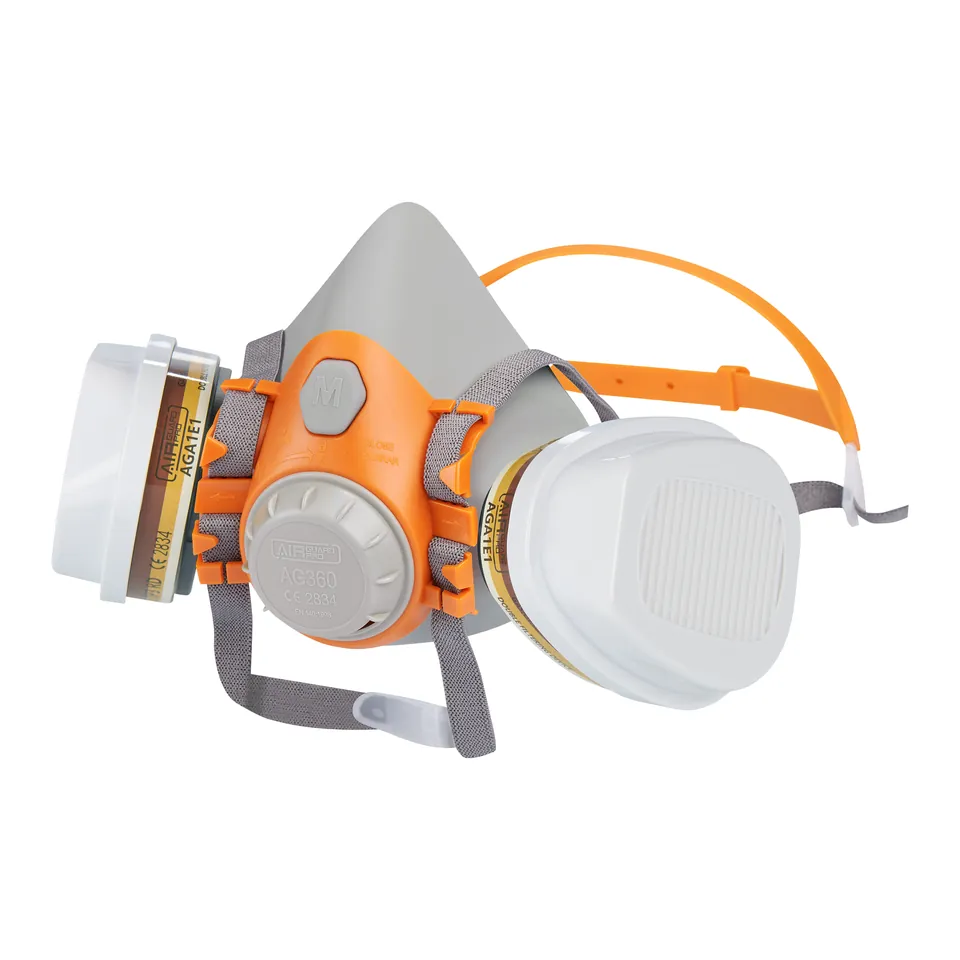
Respiratory protection (RPE) guides
FFP masks, filters, duties and practice: briefly explained for purchasing, occupational safety specialists and managers. Every statement with a source.
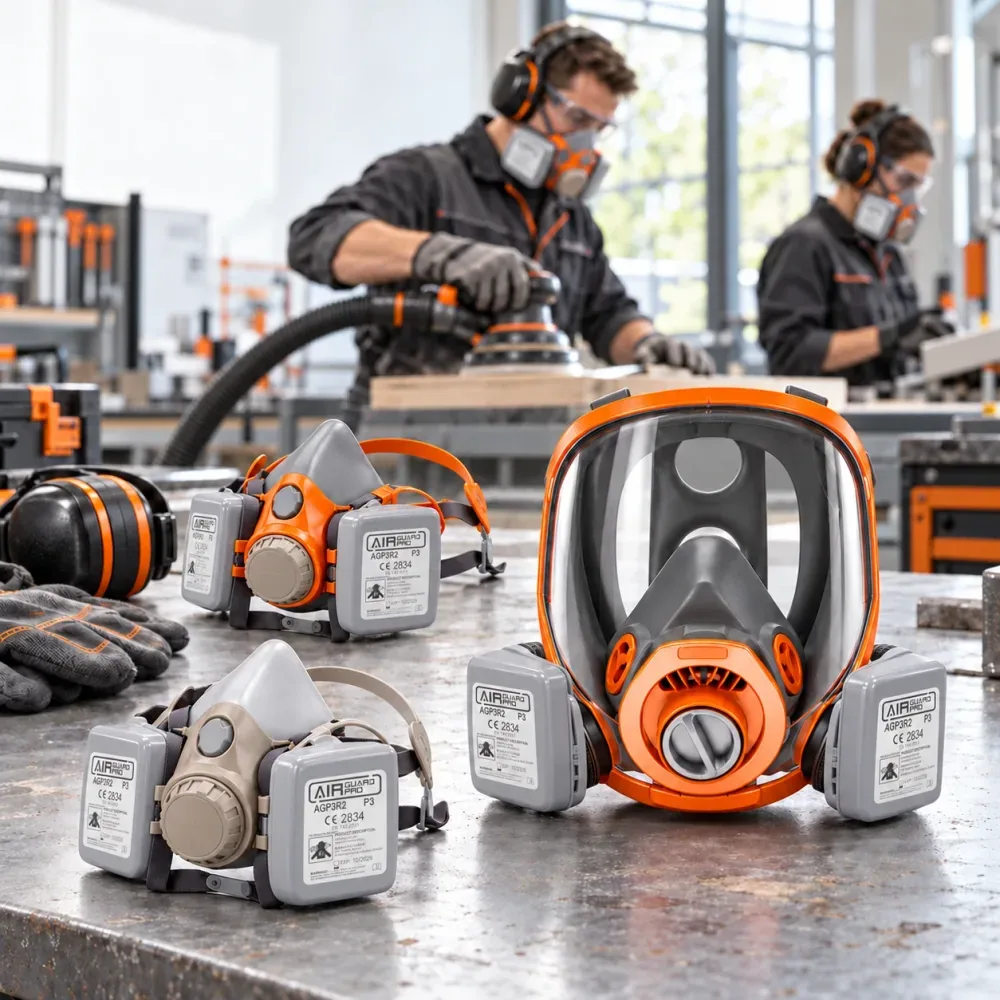 AI-edited
- 01
Colour codes on respirator filters
Understand respirator filter colour codes: A, B, E, K and P explained, with key notes on choosing a filter.
- 02
Half mask or full-face mask?
Up to what multiple of the limit value does a half mask protect, and when do you need a full-face mask? Protection level under DGUV Rule 112-190, with an example.
- 03
FFP1, FFP2 or FFP3: which mask for which dust?
The difference between FFP1, FFP2 and FFP3: protection level under DGUV Rule 112-190, limits, valve, NR and D, with the matching AirGuard Pro masks.
- 04
Disposable respirator or half mask with filter?
When an FFP disposable respirator pays off and when a reusable half mask with P3 or gas filter is better: comparison by protection, care and use.
- 05
Choosing the right respirator filter
How to choose respirator filters: determine the substance, set type and class, choose the mask by protection level, check the connection. With practical examples.
- 06
Changing respirator filters: when and how often?
When to change particle, gas and combination filters: breathing resistance, change schedule, odour as a last warning sign, R and NR, storage and expiry date.
- 07
Face seal and beards: when the mask seals
Why a beard and sideburns are not permitted in the sealing area, how the face seal is checked before every use and what glasses and helmet wearers should watch.
- 08
Respiratory protection at work: the duties
Risk assessment, selection, instruction, wearing time and occupational health surveillance: what employers must arrange for respiratory protection, with legal sources.
- 09
Bayonet or RD40?
Bayonet connection or RD40 round thread to EN 148-1: differences, filter weight and which AirGuard Pro filters fit the masks AG360 and AG700.
- 10
Asbestos work: respiratory protection under TRGS 519
Asbestos work under the German TRGS 519: rules, risk areas, competence requirements and which respiratory protection applies when, from FFP2 to powered devices.
- 11
Symbols and markings on FFP masks
What the symbols on FFP masks and packaging mean: CE with number, EN 149, NR and D, instructions for use, humidity, temperature, expiry date and lot number.
- 12
Workplace exposure limit (AGW): how to use it to choose a mask
What the workplace exposure limit (AGW) is, where to find it and how to use it to choose a respirator: FFP1 to FFP3, half and full-face mask, with an example.
- 13
How can you recognise a genuine FFP mask?
How to tell a certified FFP mask: EN 149, CE mark with number, FFP class, NR/R/D and total inward leakage. A checklist for purchasing.
- 14
Putting on an FFP mask correctly: step by step
Put on an FFP mask correctly in six steps: straps, nose clip, seal check, beard and glasses. With notes on fit testing for employers.
- 15
FFP mask: how long to wear it, when to replace it
How long an FFP mask may be worn, when to replace it, whether NR masks may be reused and how long they can be stored.
- 16
FFP mask with valve or activated carbon?
What an exhalation valve does and does not do, and whether activated carbon in FFP masks protects against vapours: guidance on disposable respirators.
Standards and marking per item
Details according to the declaration of conformity, data sheet and marking of the respective item. The instructions for use are authoritative.
Sources of the standard editions: harmonised standards under Implementing Decision (EU) 2026/1279, full texts in the PPE standards portal of DIN Media, specialist information from the DGUV PPE department, graphical symbols in the ISO Online Browsing Platform. EUR-Lex · European Commission · DIN Media · DGUV · ISO OBP
Putting on the half mask and checking the face seal
- 01
Fit the filters
Place two identical AirGuard Pro filters on the bayonet connections and turn until they sit firmly.
- 02
Put on the mask
Place the mask over nose and mouth, seat the cushion on the bridge of the nose first, close the clip at the back of the neck.
- 03
Tighten the straps
Tighten the straps until the mask sits firmly and comfortably.
- 04
Check the face seal
Place the palm of your hand over the exhalation valve and exhale slowly. If air escapes at the edge, reposition. Before every use.
According to the instructions for use of the half mask AG360. A beard in the sealing area prevents the face seal.
Face seal and beards