The protection level
For every filtering device DGUV Rule 112-190 states the highest permitted multiple of the limit value. Workplace exposure limits (AGW) are listed in TRGS 900 and in section 8 of the safety data sheet.
| Device | Up to | In the AirGuard Pro range |
|---|---|---|
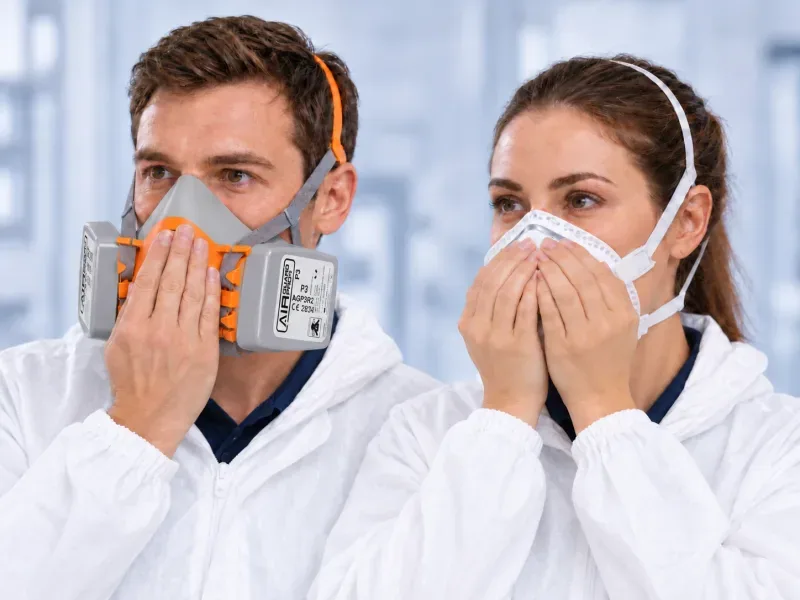
| Filtering half mask FFP1Disposable respirator 6100 | 4 × limit value | Disposable respirator 6100 |
| Filtering half mask FFP2Disposable respirators 6201, 6203 | 10 × limit value | Disposable respirators 6201, 6203 |
| Filtering half mask FFP3Disposable respirators 6311, 6311C, 6312 | 30 × limit value | Disposable respirators 6311, 6311C, 6312 |
| Half mask with particle filter P1Alternative: AG360 with AGP3R1 or AGP3R2 (P3, up to 30 × limit value) | 4 × limit value | Alternative: AG360 with AGP3R1 or AGP3R2 (P3, up to 30 × limit value) |
| Half mask with particle filter P2Alternative: AG360 with AGP3R1 or AGP3R2 (P3, up to 30 × limit value) | 10 × limit value | Alternative: AG360 with AGP3R1 or AGP3R2 (P3, up to 30 × limit value) |
| Half mask with particle filter P3AG360 with AGP3R1 or AGP3R2 | 30 × limit value | AG360 with AGP3R1 or AGP3R2 |
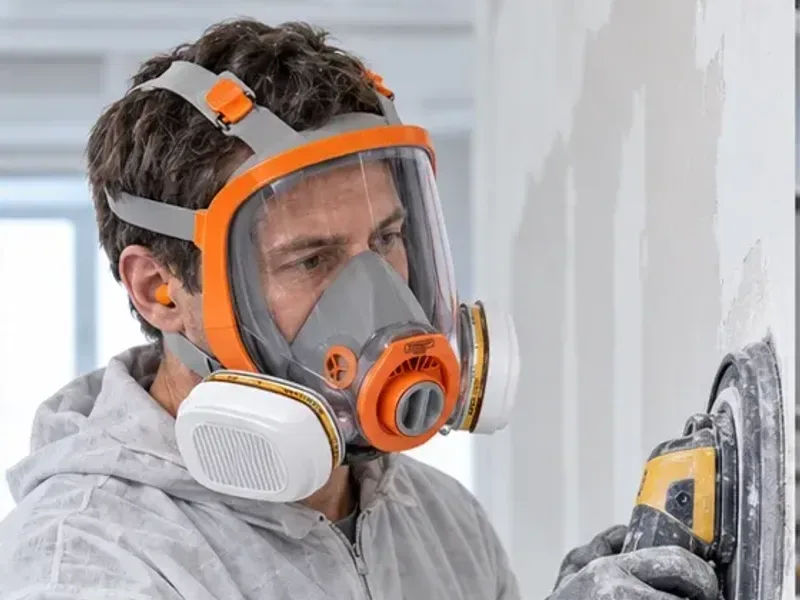
| Full-face mask with particle filter P1Alternative: AG700 with AGP3R1, AGP3R2 or AGP3R (P3, up to 400 × limit value) | 4 × limit value | Alternative: AG700 with AGP3R1, AGP3R2 or AGP3R (P3, up to 400 × limit value) |
| Full-face mask with particle filter P2Alternative: AG700 with AGP3R1, AGP3R2 or AGP3R (P3, up to 400 × limit value) | 15 × limit value | Alternative: AG700 with AGP3R1, AGP3R2 or AGP3R (P3, up to 400 × limit value) |
| Full-face mask with particle filter P3AG700 with AGP3R1, AGP3R2 or AGP3R | 400 × limit value | AG700 with AGP3R1, AGP3R2 or AGP3R |
| Half mask with gas filterAG360 with gas or combination filter (bayonet) | 30 × limit value | AG360 with gas or combination filter (bayonet) |
| Full-face mask with gas filterAG700 with gas or combination filter | 400 × limit value | AG700 with gas or combination filter |
How to calculate
Multiple = concentration at the workplace ÷ workplace exposure limit. Example: a substance has an AGW of 20 ml/m³, 300 ml/m³ are measured. 300 ÷ 20 = 15. 15 times is below 30: a half mask with a suitable gas filter is enough.
If 800 ml/m³ are measured, that is 40 times. Then you need the full-face mask. Gas filter class 1 is still sufficient, because 800 ml/m³ is below its limit of 0.1 % by volume (1,000 ml/m³).
Two limits apply at the same time: the protection level of the mask and the upper limit of the gas filter class (class 1 up to 0.1 % by volume, class 2 up to 0.5 % by volume). The stricter one applies.
When the full-face mask is the right choice
- The concentration is above 30 times the limit value, up to 400 times.
- Eyes and face are to be protected from irritant gases, vapours or particles.
- Class 2 gas filters are needed. In the AirGuard Pro range they only come with an RD40 thread for the full-face mask AG700.
When no filtering mask helps
- Oxygen deficiency or unclear oxygen conditions, for example in tanks, pits, shafts and confined spaces. Filters do not supply oxygen. DGUV Rule 112-190 requires at least 17 % by volume, the instructions for use of the AirGuard Pro products 19.5 %.
- Unknown hazardous substance or unknown concentration.
- Concentrations above 400 times the limit value or above the limit of the gas filter class.
- Substances for which no suitable filter exists, for example carbon monoxide for ABEK filters.
In these cases you need breathing apparatus that is independent of the ambient air.
The AirGuard Pro masks
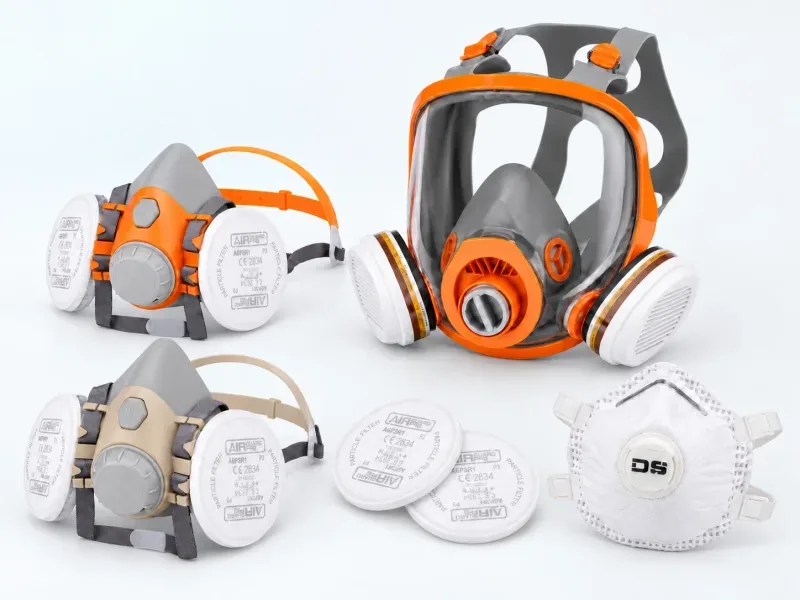
The half mask AG360 to EN 140:1998, in orange and white, takes two bayonet filters. The full-face mask AG700 to EN 136:1998, class 2, takes two bayonet filters or one RD40 filter. The respirator finder shows the suitable combination.
Frequently asked questions
Up to when is a half mask with P3 filter enough?
Up to 30 times the workplace exposure limit (DGUV Rule 112-190). A full-face mask with P3 filter is permitted up to 400 times.
Is an FFP3 mask as good as a half mask with P3?
Under DGUV Rule 112-190 both have the same protection level: up to 30 times the limit value. There are differences in reuse, breathing resistance and fit; neither protects against gases without a gas filter.
Where do I find the workplace exposure limit of a substance?
In TRGS 900 and in section 8 of the safety data sheet.
What if I do not know the concentration?
Then no filtering respirator can be selected safely. The concentration is determined in the risk assessment, by measurement if necessary.