What is in the air when removing mould
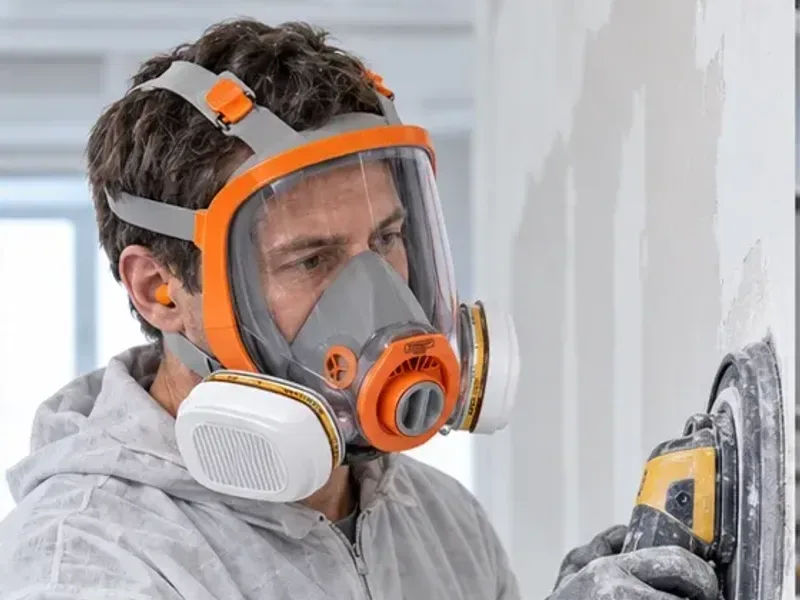
Scraping, sanding, tearing off wallpaper or removing affected materials puts spores and dust into the air. They can irritate the airways and trigger allergies. Even killed mould continues to act as an allergen and irritant. Killing alone is therefore not enough, the affected material is removed.
More important than any mask is the cause: remove the moisture, otherwise the mould returns. Larger infestations, for example whole walls or infestation behind internal insulation, belong with a specialist company according to health office recommendations. With allergies, asthma or a weakened immune system do not remove it yourself.
Which mask
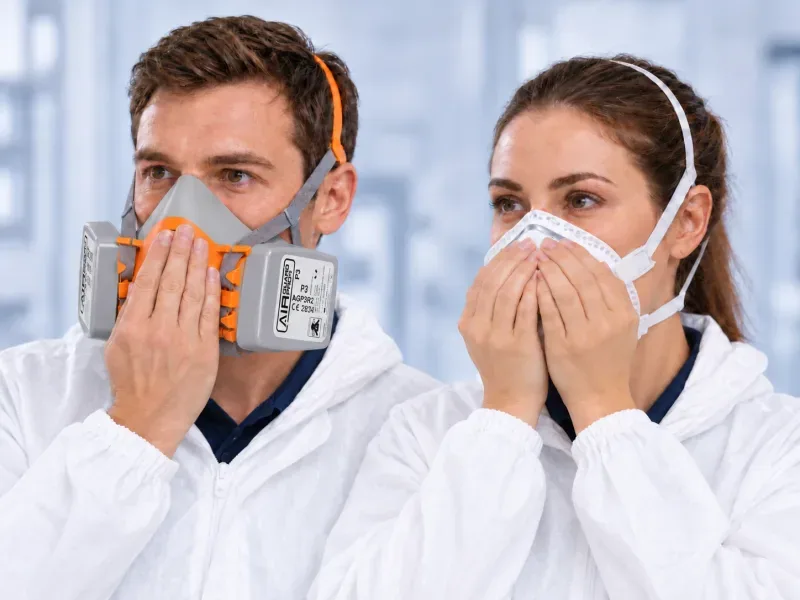
A particle filter helps against spores and dust. For short jobs with medium spore load, remediation guides from authorities name respiratory protection with P2, that is FFP2. For larger jobs or more dust FFP3 or a half mask with P3 is the safer choice. Under DGUV Rule 112-190 FFP2 is permitted up to 10 times, FFP3 and half mask with P3 up to 30 times. There is no workplace exposure limit for mould spores. The risk assessment decides.
| Situation | Suitable | Note |
|---|---|---|
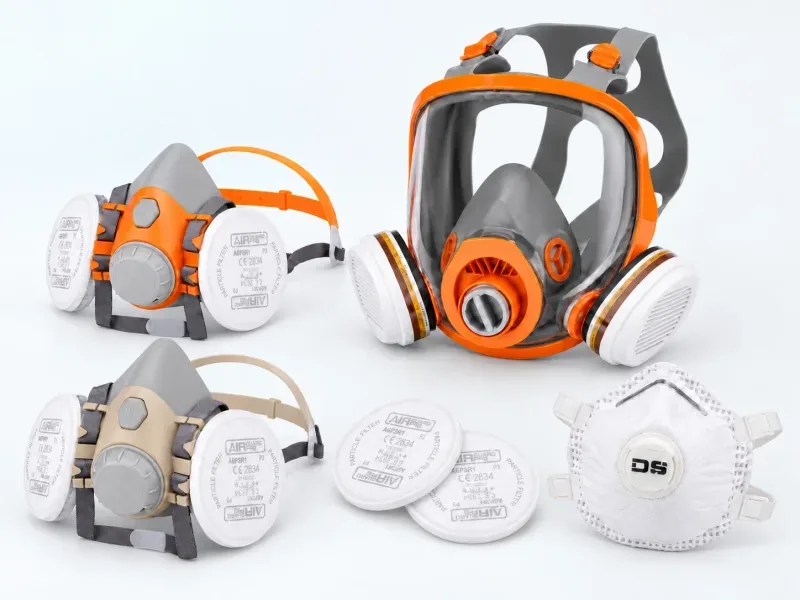
| Small infestation, short job | FFP2, for example 6201 | Dispose of the disposable mask after use. |
| Several hours, more dust | FFP3 6311 or half mask AG360 with P3 | With the half mask only the filter is replaced. |
| Very dusty work, eye protection needed | Full-face mask AG700 with P3 | Also protects the eyes. |
What belongs besides the mask
- Protective gloves, tight-fitting safety goggles and a disposable coverall or clothing that is washed thoroughly afterwards.
- Work with as little dust as possible: vacuum or dampen surfaces first, do not sweep dry.
- Dispose of affected material in sealed bags, dispose of disposable respiratory protection after use.
Limits
- Chemical agents: Anyone treating mould with chlorine, acids or solvents additionally needs a gas filter. Never mix chlorine cleaners with acid. See Chlorine and acids and Solvents.
- Face seal: a beard or sideburns prevent protection, see Face seal and beards.
- Large-area infestation: specialist company.
An overview of mask types is in the respirator finder.
Frequently asked questions
Is FFP2 enough for mould?
For short jobs with small infestation, remediation guides name FFP2 (P2). With more dust or longer work FFP3 or a half mask with P3 is safer.
Do I need safety goggles?
Yes. Spores and dust also irritate the eyes. Tight-fitting goggles belong to the equipment, the full-face mask additionally protects the eyes.
Is it enough to kill mould?
No. Even killed mould acts as an allergen and irritant. The affected material has to be removed.
When should I hire a specialist company?
With larger areas, infestation behind internal insulation, with allergies, asthma or a weakened immune system and when the cause of the moisture is unclear.